Selling a New York City car that won't start, was flooded or lost its catalytic converter
Yes, a New York City car that will not start, took on flood water or lost its catalytic converter can still be sold: the partner buyer publishes an instant online offer for non-running cars and cars missing parts, and its driver tows the car away at no charge once you accept. What changes with condition is the description you give and, for serious damage such as flooding, the Damage Disclosure Statement on the back of the New York title. This page walks through each situation: no start, no converter, flood, age and mileage, and an expired inspection sticker.
Sources re-checked .
Short answer
Yes. The partner buyer publishes that non-running cars and cars missing parts can still receive an online offer, and it arranges and pays for the tow from your New York City street or garage. Describe the condition accurately, report a stolen converter to the NYPD first, and for flood damage complete the Damage Disclosure Statement on the back of the New York title truthfully.
New York DMV: Certificate of Title; New York DMV: About New York State Inspections
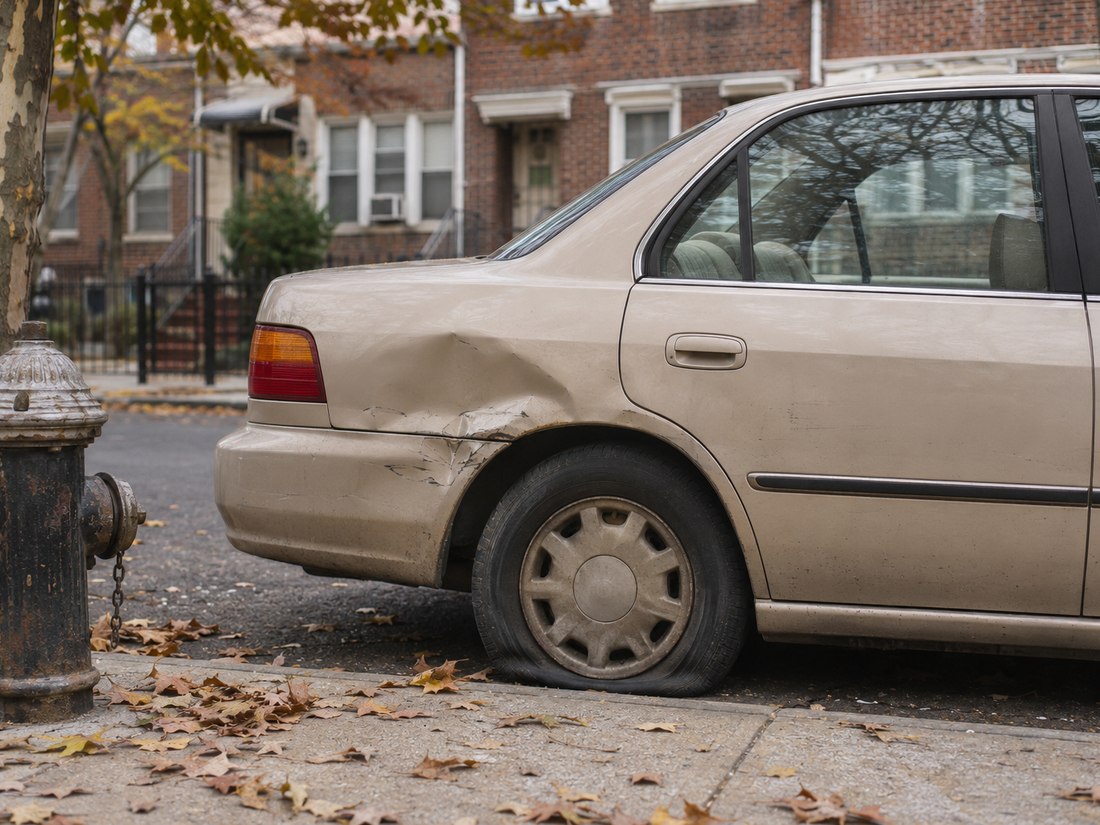
What the partner buyer says about cars that do not run or are missing parts
The partner buyer publishes a short list of what it will make an offer on, and cars in poor shape are on it. Its selling page says: "Vehicles that are non-running or missing parts can still receive a cash offer through a junk cars for cash option." The same page lists cars with engine or transmission failure, cars an insurer declared a total loss, and, in many states, cars with salvage, rebuilt or missing titles. A New York City seller fills in the same form as anyone else: it opens with year, make, model and trim, and the buyer says the offer it generates is based on the vehicle's condition and market data.
Describe the car as it sits on your block, not as it was last year. The figure you see online is the amount paid at pickup, and it holds because the buyer's driver checks the car against your description before completing the title paperwork and handing over the check. A car described as running that has to be winched onto the truck, or a converter you forgot to mention, is a mismatch the driver finds at the curb. If you are unsure, describe the car worse rather than better.
Source: The buyer: selling and free pickup.
Won't start or won't roll: the tow is the buyer's job
A car that will not start is the buyer's problem to move, not yours. The buyer publishes that it arranges and pays for pickup, towing included, at a time that suits you. After you accept, you either choose a pickup window in the buyer's account or the assigned carrier contacts you to set one.
What makes a New York City pickup go smoothly is access, and this part is advice rather than a rule:
- On the street. A flatbed needs a straight run to the car and room to drop its bed. If the car sits in an alternate-side zone, read the sign for the day you book so the car is not ticketed before the truck arrives.
- In a garage or a lot. Ask the attendant whether a flatbed can reach the car or whether staff can roll it to the curb. A low ceiling or a steep ramp can stop a flatbed at the door, and the carrier needs to know before the trip.
- Wheels that will not turn. Say so on the form and again when the carrier calls. A seized wheel, a locked steering column or a missing key means dollies or a winch, and that equipment only comes if someone asked for it.
- Be there with the paperwork. Have the title and your ID ready; the buyer's page lists both. The New York steps for the plates and the insurance behind them are on plates and insurance.
Source: The buyer: selling and free pickup; The buyer: scheduling pickup (help article).
A stolen catalytic converter: report it to the NYPD, then sell without it
A missing catalytic converter announces itself with a roar the first time you turn the key. Before you sell, report the theft. The NYPD's How to Report a Crime page says to call 911 if a crime is in progress; for a theft you found afterward, it says that "for certain report types, you can file an online police report or you can visit your local precinct". Keep the report number for your insurer and for your own records; it also fixes the date the part left the car.
Then sell the car as it is. The buyer's missing-parts line above covers a car with no converter, so state on the form that it is gone. Get the offer on the car as it stands before paying a shop for a new one, and set that figure against the repair quote. Skip the inspection station too: the DMV's inspection page says a vehicle must be inspected when ownership is transferred, that an inspection issued to the previous registrant is not valid, and that a buyer who gets the car from anyone but a DMV-registered dealer has a 10-day extension from registration, so the inspection after a sale is the new owner's (see inspection). Leave it parked; the buyer tows.
Source: NYPD: How to Report a Crime; The buyer: selling and free pickup; New York DMV: About New York State Inspections.
Flood or water damage: the disclosure on the New York title
Flood damage is where New York State's written disclosure comes in. Every New York title issued since 1994 carries a Damage Disclosure Statement on the back, and the DMV's title page is plain: "The Damage Disclosure Statement on the back of the NYS title certificate must be completed for all vehicles, regardless of the vehicle's age." The owner marks the box if the vehicle was destroyed or received damage of 75 percent or more of its retail value at the time the damage occurred. The DMV's wording of that box names no particular cause, and its definition of a salvage vehicle lists water alongside collision, theft and vandalism as a source of significant damage.
What you mark decides the buyer's path at the DMV. If you certify the damage box, the title page says: "A vehicle cannot be registered if the seller indicates the vehicle has been damaged to the extent that the cost of repairs would be in excess of 75 percent of the retail value of the vehicle at the time of loss." The car then goes through the salvage examination before anyone registers it, explained on salvage and rebuilt titles. Leaving the box blank when it should be marked is not a shortcut: the DMV's salvage pages put the fine for failing to disclose damage at up to $2,000 plus any penalty under the Penal Law, and the DMV tells buyers to run the VIN through the National Insurance Crime Bureau database for flood history before they buy.
For the partner buyer, a flooded car is a damaged car. Describe how high the water reached and whether it starts, complete the disclosure truthfully when you sign the title over at pickup, and the sale proceeds on that basis. If an insurer already paid out and you hold a salvage certificate rather than a title, the buyer's page says cars with salvage titles may still be eligible in many states; read the salvage page first.
Source: New York DMV: Certificate of Title; New York DMV: Salvage Vehicles; New York DMV: Buying a Salvage Vehicle; New York DMV: Buy, Sell or Transfer Vehicle Ownership.
Old cars, high mileage and open recalls
Age and mileage are conditions too. On the back of the New York title, the odometer disclosure is required for a vehicle built in or after the 2011 model year that is 20 model years old or newer; a 2010 or older vehicle, or a 2011-or-newer one past 20 model years, is exempt, as the DMV states the federal rule. Write the reading in when you sign the title over at pickup; a six-figure odometer is an entry, not an obstacle. The buyer's selling page says it buys vehicles of all years, running or not, so a twenty-year-old car asks for its offer the same way a newer one does. The rest of the title's back is on paperwork.
Open recalls are a separate check. Look the VIN up at nhtsa.gov/recalls, the federal recall database, rather than trusting a letter you may have thrown out years ago. The buyer's selling page says nothing about recalls, so nothing on it makes an open one a condition of the offer, but a private buyer may ask. Keep any recall repair paperwork with the service records, which the buyer's page lists as support for a condition claim.
Source: New York DMV: Certificate of Title; The buyer: selling and free pickup.
A failed or expired inspection does not need fixing before the sale
A failed or lapsed inspection sticker does not have to be cured before you sell. New York State inspections expire on the last day of the month punched on the sticker, and the DMV's inspection page sets the fine for an expired one at $25 to $50 within the first 60 days and $50 to $100 after that, plus a mandatory state surcharge of $88 ($93 in town and village courts), as of that page on 2026-11-07; a parked car with an expired sticker can also draw a parking ticket. That is a reason not to leave the car on the street for months, not a reason to pay for a re-test: the DMV says an inspection issued to the previous registrant is not valid for the buyer, and a buyer who gets the car from anyone other than a DMV-registered dealer gets an inspection extension of 10 days from the date of registration. The sticker is the next owner's concern. How the annual inspection and the sale fit together is on inspection.
Two questions sellers ask about condition
Do I have to repair a car before the partner buyer will take it?
No. The buyer publishes that non-running cars and cars missing parts can still receive an offer, so describe the car as it is on the form and let the driver verify it at pickup. The online figure is the amount paid at pickup when the car matches that description. See the buyer's selling page.
Must I tell a buyer in New York that the car was flooded?
If the flooding destroyed the car or caused damage of 75 percent or more of its retail value, yes: mark the box on the Damage Disclosure Statement on the back of the New York title, completed regardless of the vehicle's age, and the DMV puts the fine for failing to disclose damage at up to $2,000 plus Penal Law penalties. Source: the DMV's salvage branding page.
Pick up where this leaves off
Once you know the condition is not a barrier, the sale itself is on how the offer works, and a car that is more scrap than car is covered on junk car. For a car in a condition this page does not describe, call (332) 456-9629.
More on selling a car in New York City
- PaperworkThe Transfer by Owner block, the MV-912 bill of sale, the DTF-802 tax form, the odometer and damage boxes, and the twelve state DMV offices in the five boroughs.
- Plates & insuranceWhy the plates come off before a New York City sale, how to surrender them by mail or at a borough DMV office, the FS-6T receipt, and the per-day penalty if the insurance ends first.
- InspectionWhether a New York City seller needs an inspection before a sale (no), the buyer's 10-day extension, the OBD II test and fees in the five boroughs, and selling a car that failed.
- Title problemsA lost New York title, a lender on it, a late parent's car, mismatched names or no proof at all: the DMV form and fee for each, and what the buyer accepts.
- Junk carWhat to do with a junk car in New York City: the partner buyer's free pickup, a DMV-licensed dismantler and form MV-907A, or a 311 derelict report, with plates off first.
- Where to sellPrivate sale, dealer trade-in or instant offer in New York City: the 8.875% tax and $50 title fee a buyer pays the DMV, the trade-in tax rule, and repair-or-sell arithmetic.