Selling a car to a stranger in New York City without getting burned
A safe private sale in New York City runs in one order: verify the buyer, verify the money, then sign the title, hand over the MV-912 bill of sale and your part of the DTF-802, and take your plates and windshield sticker with you. The New York DMV publishes advice on private sales, with an NYPD statement beside it, and most of it is aimed at buyers. This page turns the same guidance around for the seller, from the first message to the moment the car leaves your block on the buyer's own plates or permit.
Sources re-checked .
Short answer
Meet at a public exchange location, not your home; the NYPD says its precincts have them. Ride along on every test drive while the car is still registered to you. Verify the check with the issuing bank before you sign anything. Then sign the title, hand over the MV-912 and your part of the DTF-802, and take your plates and sticker with you.
New York DMV: DMV warns consumers of surge in car sales scams; New York DMV: surrender your plates and registration
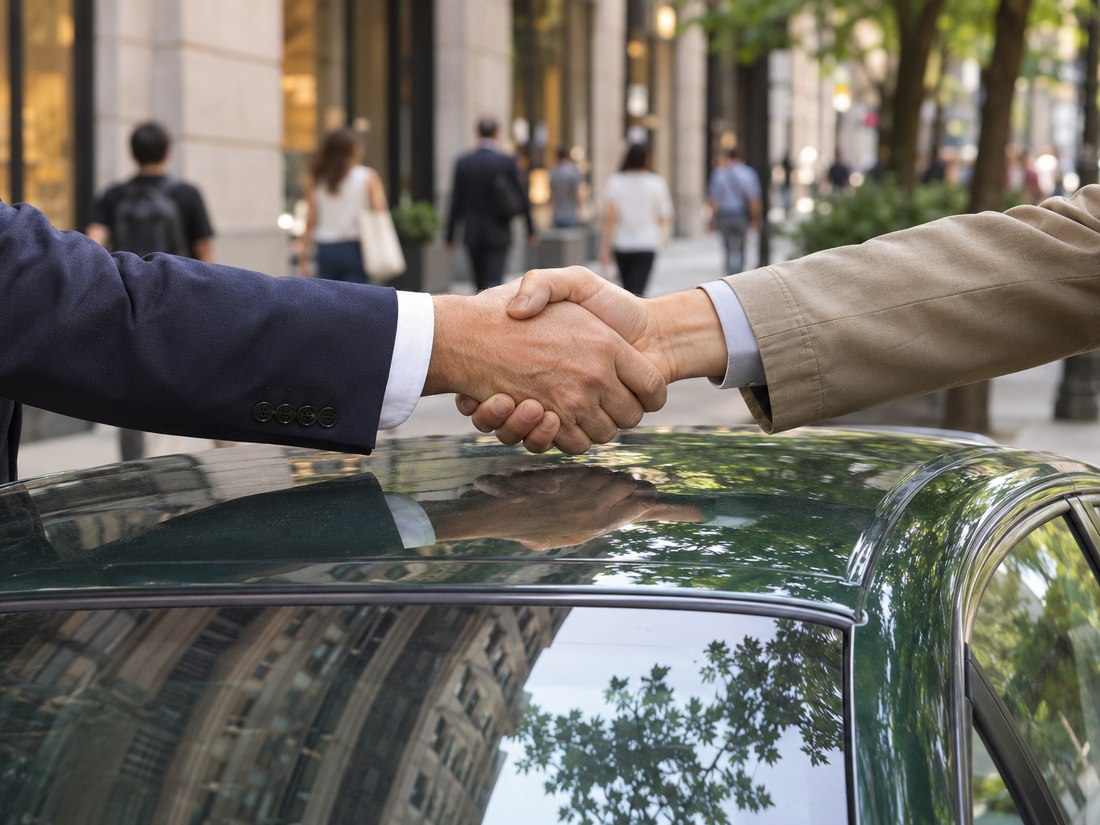
Before you list: title in hand, data wiped, tags out
Start with the title. The New York DMV tells buyers to make sure the seller has a title in their own name, with a lien release if a lender is printed on the front, and to ask for identification. Fix those first; a lost title, a lender or a mismatched name are covered on title problems.
The DMV also warns that a motor vehicle office will not accept a title with anything altered, erased or crossed out, including a name or signature. Do not pre-fill the back; the transfer section and the odometer and damage statements are completed at the handover, once.
Then clear the car. Delete paired phones, saved addresses and garage codes from the dash. Take out the garage remote, the building parking card and your E-ZPass tag, so the tag does not ride off with the buyer (E-ZPass New York). Photograph the odometer and the VIN plate: the mileage you write on the title for a model year 2011 or newer car that is 20 model years old or newer is a disclosure the DMV requires, and the photo is your record of what the dash said that day.
Source: New York DMV: DMV warns consumers of surge in car sales scams; New York DMV: Let the Buyer Be Aware; New York DMV: acceptable proofs of ownership.
Meeting buyers: the NYPD's advice, turned around for the seller
When the New York DMV warned about a surge in private-sale car scams, the NYPD's statement on that page named robberies of sellers as well as buyers. Its advice: "verify the credentials of the other party, thoroughly research the vehicle's history, avoid carrying cash, and insist on meeting at a designated and signposted e-commerce exchange location that is public and safe." The same statement says such sites exist at each of the NYPD's 77 precincts. This page lists no addresses; ask your precinct where its exchange location is, or ask its Crime Prevention Officer, whom the NYPD's crime prevention page says you can reach directly by email or phone.
Rules that follow: meet in daylight, bring a second adult, and keep the buyer away from your home and garage. Ask for a driver license before the hood goes up and photograph it.
While the car is listed on the street, the NYPD's vehicle theft tips apply: never leave property inside, lock it and set the alarm every time, and park in high-traffic or well-lit areas when possible.
Source: New York DMV: DMV warns consumers of surge in car sales scams; NYPD: crime prevention and safety tips; NYPD: vehicle theft prevention tips (PDF).
Test drives: the car stays registered and you stay in it
The New York DMV's buyer brochure says a buyer may take the car for a test drive if the vehicle is properly registered. From the seller's side that means the car still carries your plates and registration during the drive, which is why the plates come off at the end of the sale and never before a viewing.
Ride along, and have your second adult hold the buyer's license. Pick the route yourself: a loop with a stretch of highway, stop-and-go blocks and a hill is what the DMV describes as a proper test, and it keeps the car near your meeting point. Do not let a buyer drive alone to a mechanic; drive there or meet there.
The DMV's buyer brochure does not say who pays for damage on a test drive or whether a buyer's policy follows them into your car. Until the title is signed over, the car and its registration are still yours. Keep drives short and keep your insurance in force until the plates are surrendered, a New York rule covered on plate surrender.
Source: New York DMV: Let the Buyer Be Aware; New York DMV: surrender your plates and registration.
Payment: the fake check, the overpayment and how to verify
The New York Attorney General's consumer guide puts the fake check in one line: "This scam works because you have to wire the money before the check clears." The guide adds that the checks usually look real, and sometimes are real, with no money behind them. In a car sale it can arrive as an overpayment: a check for more than the price, a story about a shipper, and a request to refund the difference. When the check bounces, the refund is gone and so is the car. A buyer who wants money back from you is not a buyer.
The DMV's advice to buyers is that "If possible, the purchaser should use a cashier's check made out to the seller in lieu of cash." A cashier's check is only as good as the bank that issued it, and a counterfeit can look real. Look up the issuing bank's number yourself, never from the check, and ask it to confirm the check number and amount. Better, meet at a branch of the buyer's bank and watch the check being issued, or deposit it at your own branch on the spot. A deposit showing in your balance is not a cleared check; ask your bank when the funds are final.
Nothing changes hands until the money is real: no signed title, no MV-912, no keys. The New York Department of State's scam prevention page says not to rely on a check being accepted for deposit, because victims send money back before learning the check is bogus; the Federal Trade Commission's consumer site, consumer.ftc.gov, is the federal reference. If a sale goes wrong, report it to your precinct and your bank at once.
Source: New York Attorney General: Smart Seniors consumer guide; New York DMV: DMV warns consumers of surge in car sales scams; New York Department of State: scam prevention.
The handover order in New York, step by step
Once the payment is verified, the New York paperwork goes in this order. The forms are explained in depth on paperwork.
- Sign the title. The DMV says the seller must complete and sign the transfer ownership section of the title certificate. Fill in the odometer disclosure if the car is model year 2011 or newer and 20 model years old or newer, and the damage disclosure, which the DMV requires for every vehicle regardless of age. No corrections.
- Hand over the MV-912 bill of sale. Both parties sign it, even for a gift. It carries the year, make, model, VIN, price, date, and both names, addresses and signatures. Keep a copy: the DMV's insurance-lapse page lists a bill of sale as your proof of sale if a letter ever arrives in your name.
- Complete your part of the DTF-802. The DMV's sales tax page says buyer and seller both complete the Statement of Transaction for a private sale; the buyer takes it to the DMV, which calculates and collects the tax. The form's instructions make the seller complete Section 6, the affidavit, when the car is sold below fair market value to someone who is not a spouse, parent, child, stepparent or stepchild.
- Take your plates and sticker. The DMV's brochure tells sellers to remove the license plates and the windshield registration sticker before the sale, to avoid being charged with parking tickets that are not yours. In New York City, parking tickets and camera violations are the Department of Finance's; tickets dated after the sale are covered on parking tickets.
- Surrender or transfer the plates. You must surrender the plates and registration before you cancel the liability insurance, or transfer them to another vehicle you own. The receipt is form FS-6T; the procedure and the lapse penalty for doing it backwards are on plate surrender.
Source: New York DMV: buy, sell or transfer vehicle ownership; New York DMV: sales tax information; New York State Tax: Form DTF-802 (PDF); New York DMV: Let the Buyer Be Aware; New York DMV: insurance lapses; New York DMV: surrender your plates and registration; NYC Department of Finance: camera violations.
How the buyer drives away: their plates or a permit, never yours
The plates stay with you, not with the car, and the DMV's surrender page is blunt about lending them: "Do not give your plates to another person unless that person will surrender the plates for you." A buyer who drives off on your plates is driving on your registration, and parking tickets and camera violations issued to that plate come to you. The buyer has three DMV routes for moving the car.
- Transfer their own registration. A New York registrant who sold or gave away a vehicle can move its registration and plates to another vehicle they own, at a DMV office, if that registration has not expired. The plates go on your car only after the DMV has moved them.
- Register and title the car first. The buyer must register and title the car in their name after a private sale. The DMV issues the plates, the sticker and a 10-day inspection extension, and says an inspection issued to the previous registrant is not valid, so your sticker does not carry over.
- An in-transit permit. For a buyer taking the car out of New York State to register it there, or to another part of the state to register it, the DMV issues interstate and intrastate in-transit permits. As of the DMV's page, a permit is valid for 30 days and costs $12.50; the applicant files form MV-82ITP at a DMV office with proof of ownership, proof of identity, payment and proof of insurance in original form, such as a New York State Insurance ID Card; a non-resident may use an insurance binder or a letter from an out-of-state agent or broker.
The DMV's scam warning adds: do not use a temporary registration certificate or plate unless the New York DMV or a licensed DMV facility issued it. If the buyer has none of these ready, the car stays parked and the sale is not finished.
Source: New York DMV: surrender your plates and registration; New York DMV: register and title a vehicle; New York DMV: in-transit vehicle permits; New York DMV: DMV warns consumers of surge in car sales scams.
Two questions sellers ask
Can the buyer drive the car home on my plates and mail them back?
No. The New York DMV says not to give your plates to another person unless that person will surrender them for you, and the plates must be surrendered before you cancel insurance. Until they are, parking tickets on that plate are yours. New York DMV: surrender your plates.
Is a cashier's check safe to accept for a car in New York City?
Only once you have verified it. The New York DMV suggests buyers pay by cashier's check made out to the seller rather than carrying cash, but counterfeits exist. Call the issuing bank on a number you looked up yourself, or deposit it at your own branch and ask when the funds are final before signing anything. New York DMV: car sales scams.
If the private route is more than you want
A private sale in New York City means strangers, test drives and a check you have to verify yourself. The alternative is an instant online offer from the partner buyer, with a check handed over at pickup once the driver has inspected the car; how the offer works lays out the steps, and selling options compares the two routes. Questions about either: (332) 456-9629.
More on selling a car in New York City
- PaperworkThe Transfer by Owner block, the MV-912 bill of sale, the DTF-802 tax form, the odometer and damage boxes, and the twelve state DMV offices in the five boroughs.
- Plates & insuranceWhy the plates come off before a New York City sale, how to surrender them by mail or at a borough DMV office, the FS-6T receipt, and the per-day penalty if the insurance ends first.
- InspectionWhether a New York City seller needs an inspection before a sale (no), the buyer's 10-day extension, the OBD II test and fees in the five boroughs, and selling a car that failed.
- Title problemsA lost New York title, a lender on it, a late parent's car, mismatched names or no proof at all: the DMV form and fee for each, and what the buyer accepts.
- Any conditionSelling a New York City car that will not start, was flooded or lost its catalytic converter: what the buyer takes, who pays the tow, and the title disclosure the DMV requires.
- Junk carWhat to do with a junk car in New York City: the partner buyer's free pickup, a DMV-licensed dismantler and form MV-907A, or a 311 derelict report, with plates off first.