Unpaid Tickets, Boots and a Car Sale in New York City
Unpaid New York City parking and camera tickets do not stop you from selling the car, but they follow the registered owner, not the vehicle. The Department of Finance turns an unanswered ticket into a judgment after roughly 100 days, boots or tows a car once the judgment total reaches $350, and five judgments in a 12-month period bring a registration suspension at the New York DMV. This page gives the Department of Finance's own numbers and words, the steps to get a boot off before a pickup, and the proof you need when a ticket arrives for a car you no longer own.
Sources re-checked .
Short answer
Unpaid New York City tickets stay with the registered owner, not the car. The Department of Finance enters a judgment about 100 days after an unanswered ticket, boots or tows once judgments reach $350, and five judgments in a year suspend your registration at the DMV. A ticket dated after your sale is a complete defense once you show proof of the transfer, such as the DMV plate surrender receipt.
Department of Finance: vehicle booting; Department of Finance: common reasons for disputing a ticket
When a New York City ticket becomes judgment debt
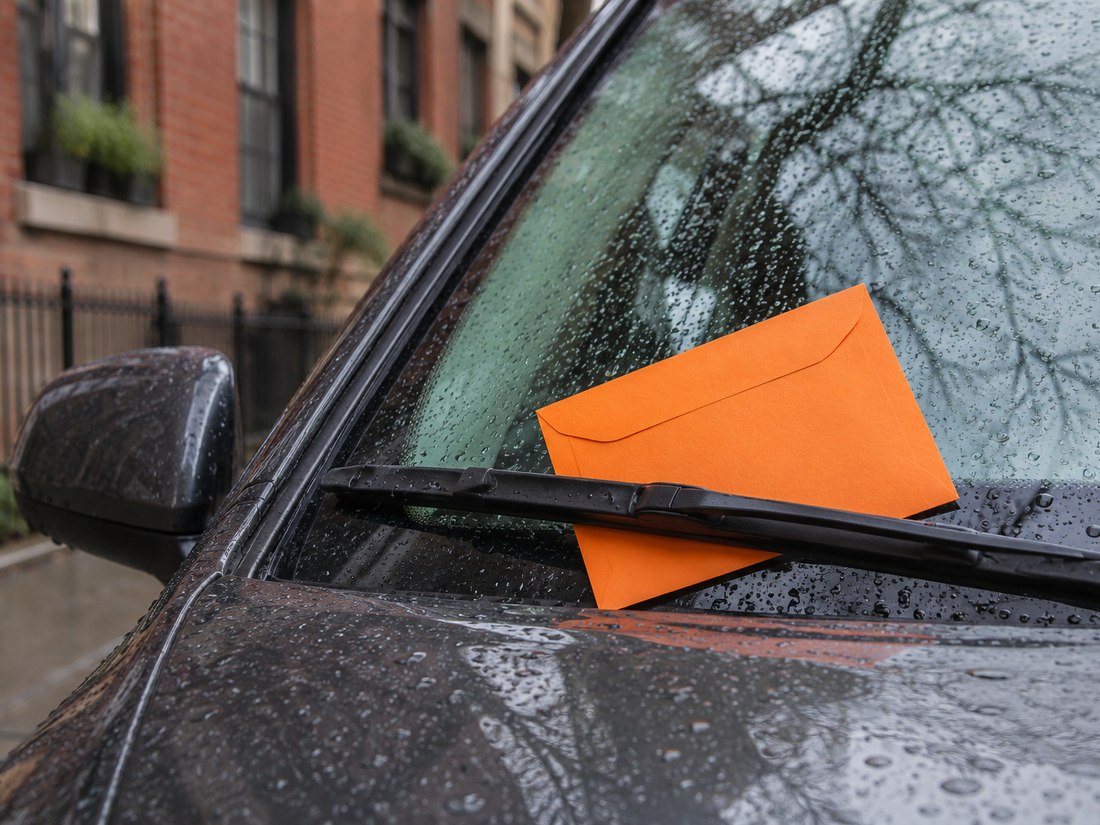
A parking ticket in New York City is a Department of Finance matter, not a DMV one. The DOF gives you 30 days from the ticket date to request a hearing before late penalties apply. Leave it longer and the agency is blunt: "If you do not pay or dispute your ticket within approximately 100 days, it will go into judgment." Its FAQ page adds that camera violations move faster, going into judgment after approximately 75 days.
The City enters a default judgment for the whole amount plus penalties and interest, can send the debt to a collection agency or seize assets, and counts the total toward the booting line below. The DOF says you will receive warning notices before a boot or tow.
You can still fight a ticket in judgment, but only within one year of the date it went into judgment. The DOF takes the request online; in person or by mail, the registered owner first files a Parking/Camera Violations Request for Hearing After Judgment form. A judge grants the hearing only if you show a valid defense and a good reason for not answering sooner.
Source: Department of Finance: tickets in judgment; Department of Finance: dispute a ticket FAQs.
The $350 line: who boots and who tows
The Department of Finance states the threshold in one sentence: "Your vehicle can be booted if you owe the City of New York $350 or more in parking or camera violation tickets that are in judgment." Booting and towing for judgment debt is done by the Sheriff's Office and by city marshals. Their boots are painted green with a keypad, and a notice goes on the driver's side window and under the wiper.
The NYPD is a separate route. Its boots may be yellow or blue, have no keypad, and the DOF says every NYPD-booted vehicle is subject to immediate tow. The NYPD can tow at any time for illegal parking or for a car without valid registration or insurance; the towed or impounded page covers that route.
Once a green boot is on, the clock is short. The DOF says the car may be towed if the judgment debt and fees are not paid within 48 hours of booting, and at once if you owe $2,500 or more, the registration is not valid, or the car is a public safety issue. The DOF's boot contractor, Republic Immobilization Services, takes payment at (646) 517-1000 around the clock, seven days a week, and the DOF lists boot return locations in all five boroughs.
Getting a boot off before the pickup
The boot unlocks only with the DOF's release code, so it comes off before you schedule any pickup. The DOF's steps, as of its booting page read in November 2026:
- Pay all outstanding judgment debt and the related fees online at www.nycbootpay.com or by phone at (646) 517-1000, the number on the boot notice. Online or phone payment gives you a release code immediately; paying at a Department of Finance business center means waiting for an assisted release.
- Enter the release code on the boot's keypad to unlock it.
- Return the boot to one of the drop-off locations on the DOF page within one day. A boot kept longer costs $25 per day, up to a $500 maximum.
The fees on top of the tickets, for vehicles booted on or after November 1, 2025: a boot fee of $185, a Sheriff or Marshal execution fee of $95, and poundage of 5% of the sum collected. If the car has already been towed for judgment debt, the DOF's table for a vehicle under 8,500 pounds adds a $220 tow fee, a $140 tow dispatch fee, and storage of $30 per day for the first three days and $50 per day after that. The DOF's towed-vehicles page still lists older figures for the same fees; the booting page's table, split by boot date, is the one dated November 2025.
If you cannot pay in full, the DOF lets a booted or towed owner enroll in a payment plan through Republic Immobilization Services with 20% of the judgment debt down plus all fees, provided your license, registration and insurance are current. Do nothing and the DOF's booting page says towed vehicles are scheduled for auction if not retrieved within 10 business days of the tow; its towed-vehicles page puts it at as soon as 10 days after the tow for a car not retrieved within 72 hours.
Source: Department of Finance: vehicle booting; Department of Finance: towed vehicles; Department of Finance: dispute a ticket FAQs.
Do unpaid tickets stop the sale, the plate surrender or a new registration?
The New York DMV's own parking-ticket page says it does not handle parking violations, and that you answer tickets in the locality that issued them. It then describes the one thing it will do: "DMV can prevent the renewal of your vehicle registration, or suspend your vehicle registration." That follows a notice from the locality, and the DMV says you cannot renew until you respond to the tickets and pay the fines.
The Department of Finance gives the New York City number. Its proof-of-satisfaction page says the DMV will suspend your registration if you have five or more parking tickets in judgment within a 12-month period, and that you cannot obtain or renew a registration until the tickets are paid, placed on a payment plan, or dismissed at a hearing. Paying in full online sends the clearance to the DMV within 72 hours; paying at a business center gets you a clearance notice to carry in. That matters if you plan to register a replacement car in the five boroughs.
Neither the DMV's plate-surrender page nor the DOF pages linked here make a ticket balance a condition of surrendering plates or signing a title over. The plates come off before the sale and go back to the DMV, as the plate surrender page explains, whatever the balance. The practical bar is physical: a booted or towed car is released only when the judgment debt and the boot and tow fees are paid, and the DOF says you need a valid registration, a driver's license and current insurance to reclaim it.
Source: New York DMV: parking tickets; Department of Finance: proof of satisfaction and registration clearance; New York DMV: surrender your plates and registration.
A ticket dated after you sold: the transferred-vehicle defense
Tickets go to the registered owner on file, so a camera violation or parking summons can reach your mailbox months after the buyer drove away. The Department of Finance lists this among its common reasons for disputing a ticket and treats it as a full answer: "If you sold, gifted, or otherwise transferred the vehicle prior to the ticket issuance, you have a complete defense to any ticket."
The DOF wants proof of the transfer. Its page names DMV plate transfer or surrender documentation, canceled or transferred insurance documentation, or documentation showing the vehicle was registered to another party. The same page carries the reminder that explains many of these tickets: remove your registration sticker when you transfer the car. A buyer who drives around Manhattan on your plates or sticker keeps generating violations in your name.
Dispute the ticket the normal way: request a hearing within 30 days of the ticket date, online, by mail or through the DOF's Pay or Dispute app, and attach copies of your proof. The DOF's evidence page says to send copies, never originals, and to keep the evidence in case of an appeal. Online and mail decisions arrive by email; the DOF asks you to check in if nothing has come within three weeks. If the ticket is already in judgment, use the after-judgment request described above while the one-year window is open.
Source: Department of Finance: common reasons for disputing a ticket; Department of Finance: dispute a ticket; Department of Finance: evidence recommendations.
The paperwork that proves the date you sold
Every defense above turns on the date the car stopped being yours. Three documents fix it.
- The bill of sale. The New York DMV asks the seller to sign a Vehicle Bill of Sale, form MV-912, and lists the date of the sale among the items an acceptable bill of sale carries. The DMV says the buyer and seller can make photocopies for their records while the buyer hands the original to the DMV.
- The plate surrender receipt. The DMV issues form FS-6T when the plates are surrendered at an office, or mails it to the address on the registration after a PD-7 mail surrender, which it dates by postmark; if someone else turns in your plates the DMV says to make sure they give you the FS-6T. The routes are on plate surrender. This is the DMV document the DOF's transferred-vehicle defense names first.
- The insurance record. The DMV says to surrender the plates before you cancel liability coverage. The cancellation letter then dates the end of your interest in the car, and the DOF accepts it as evidence.
A camera violation reaches judgment in about 75 days, a parking ticket in about 100, and a hearing after judgment stays open for a year, so keep the folder for two years to cover every window. The after you sell page walks through the refund and toll account steps that use the same papers.
Source: New York DMV: buy, sell or transfer vehicle ownership; New York DMV: surrender your plates and registration; Department of Finance: common reasons for disputing a ticket.
Two questions sellers with tickets ask
Can the partner buyer pick up a car that is booted?
The boot has to come off first. The Department of Finance releases a booted car once all judgment debt and the boot fees are paid, or a payment plan down payment plus all fees, and a boot kept past the first day costs $25 a day. Pay, enter the release code, return the boot, then schedule the pickup. The DOF's steps are on its vehicle booting page.
I sold the car and a speed camera ticket arrived. Do I owe it?
Not if the transfer came first. The Department of Finance calls a sale, gift or transfer before the ticket date a complete defense to any ticket, and accepts the DMV plate surrender receipt, your insurance cancellation, or proof the car was registered to someone else. Dispute within 30 days through the DOF's transferred-vehicle defense.
Clear the debt, then sell the car
Tickets in judgment are paid to the Department of Finance by the registered owner whether the car sells or not, so the sale itself is the way to stop new ones. Read how the partner buyer's offer works, get the New York paperwork in order, and surrender the plates the day the car leaves. Questions about a booted or ticketed car before you start? Call (332) 456-9629.
More on selling a car in New York City
- PaperworkThe Transfer by Owner block, the MV-912 bill of sale, the DTF-802 tax form, the odometer and damage boxes, and the twelve state DMV offices in the five boroughs.
- Plates & insuranceWhy the plates come off before a New York City sale, how to surrender them by mail or at a borough DMV office, the FS-6T receipt, and the per-day penalty if the insurance ends first.
- InspectionWhether a New York City seller needs an inspection before a sale (no), the buyer's 10-day extension, the OBD II test and fees in the five boroughs, and selling a car that failed.
- Title problemsA lost New York title, a lender on it, a late parent's car, mismatched names or no proof at all: the DMV form and fee for each, and what the buyer accepts.
- Any conditionSelling a New York City car that will not start, was flooded or lost its catalytic converter: what the buyer takes, who pays the tow, and the title disclosure the DMV requires.
- Junk carWhat to do with a junk car in New York City: the partner buyer's free pickup, a DMV-licensed dismantler and form MV-907A, or a 311 derelict report, with plates off first.