Selling a car online in NYC: the offer, the pickup, the check
You describe the car online, get a free offer with no obligation, accept it within a week, and the buyer's driver collects the car from your block and hands you a check after checking it over. That is the partner buyer's whole process. What does not travel with the car are your New York duties: the plates and the windshield sticker come off before the truck leaves, the plates are surrendered to the New York DMV or moved to your next car, and the bill of sale is yours to sign. This page walks the sequence in order, in the buyer's own words where a promise is being made.
Sources re-checked .
Short answer
You describe the car online and get a free offer with no obligation. You have a week to accept and set a pickup window. The buyer's driver comes to your block, checks the car against your description, completes the buyer's transfer paperwork, and hands you a check. The plates, the sticker and the New York bill of sale stay your job.
New York DMV: insurance lapses; New York DMV: surrender your plates
Describing the car is the whole first step
The offer starts with a form, not a phone call. You enter the car's basic details into the online form and answer its condition questions. The buyer's page describes the result this way: "Our system generates a free, no-obligation cash offer based on your vehicle's condition and market data." Its home page says you can do this without an account, and nothing is owed if you walk away.
Answer the condition questions as the car is today, not as it was when it last ran. The buyer's appraisal article says the offer is based entirely on the condition details you give online, and the selling page says that vehicles that are non-running or missing parts can still get an offer, and that in many states a car with a salvage, rebuilt or missing title may still be eligible. At pickup the driver verifies the car against what you typed, so an accurate answer now is what keeps the offer steady then. Cars with cosmetic or mechanical damage are covered in more depth on selling a car in any condition.
Source: The buyer: selling and free pickup; The buyer: home page; The buyer: inspection and appraisal.
A week to accept, then a pickup window
On the buyer's home page you have a week to accept the offer and to schedule the pickup. The buyer describes the full span from first number to money in hand like this: "The process usually takes a few days, from our initial offer through pickup scheduling and receipt of your payment." Treat that as the buyer's description of a typical sale, not a promise about yours.
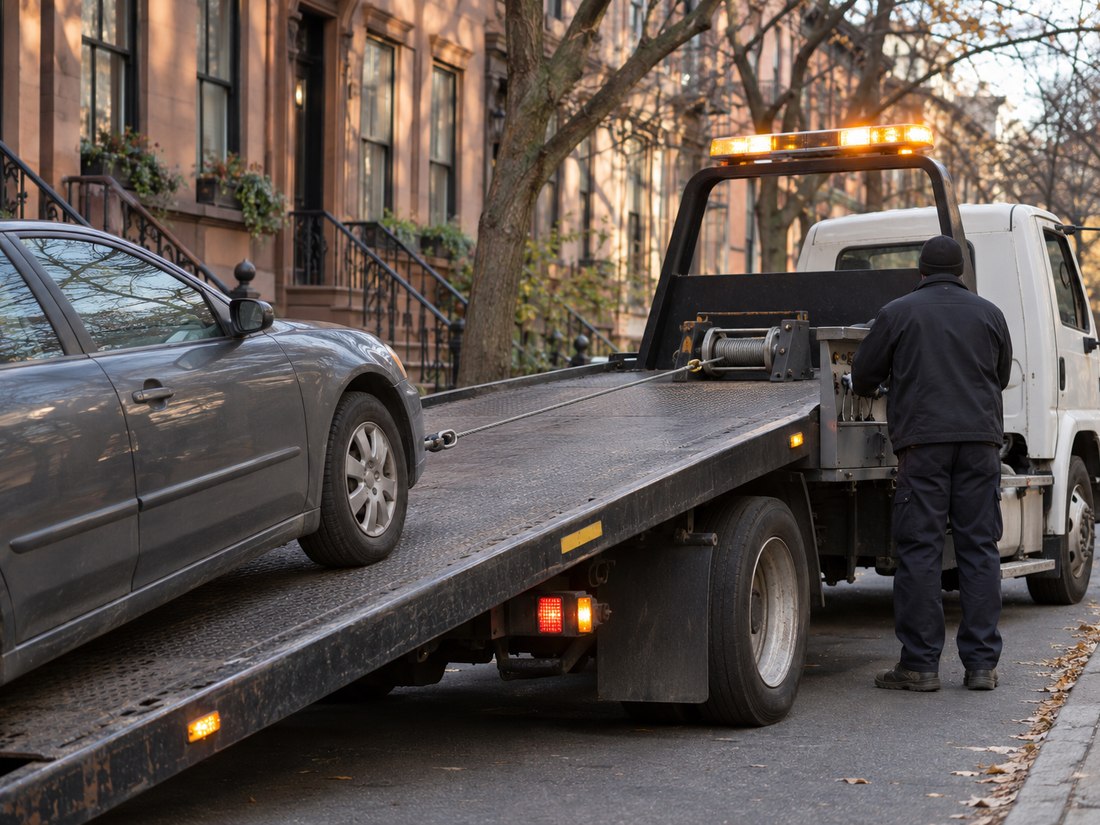
The buyer's help article on pickups gives two routes. After you accept, you may be able to pick a date and time yourself from your account under My offers, using the Choose pickup window button. If that button is not there, self-scheduling is not offered in your area and the assigned carrier contacts you to set a time. The carrier's name and contact details are in your account and in the texts and emails you receive. Towing is arranged and paid for by the buyer at a time that suits you. Its tow-truck article says the carrier comes to the car wherever it is and you do not need to drive or move it; cars that do not run are collected when the condition questions were answered accurately, so the right equipment comes.
Source: The buyer: home page; The buyer: how to schedule pickup; The buyer: selling and free pickup; The buyer: the tow truck comes to the car.
What the driver does when the truck arrives
Pickup is also the inspection. In the buyer's words: "At pickup, the driver verifies your vehicle and completes the title transfer paperwork." The driver takes the signed title and the keys and handles the buyer's side of the transfer. The home page puts the payment moment plainly: "Our pickup partner will hand you a check once they inspect the car." Payment is a check, handed over at the curb after the inspection, not before.
What can change the number is the car not matching its description. The buyer's page says the instant offer provided online "is the amount paid at pickup, eliminating price changes or haggling." Read that with its condition. The buyer's appraisal article says the carrier verifies the car's condition and VIN at pickup, and that if there is a discrepancy between the condition you described and the car's actual condition, the offer amount may be updated. A car described as complete that is missing its catalytic converter is that discrepancy. After you accept, the same article says, you may be asked for photos of the car or the paperwork from your phone, which is not an in-person inspection.
Source: The buyer: selling and free pickup; The buyer: home page; The buyer: when you get paid; The buyer: inspection and appraisal.
No title, or a loan still on the car
Two situations change the answer, and the buyer publishes both. On a missing title, its help article says that many of its buyers take cars without a title. The instruction is to start the offer and, when asked about the title, choose the answer that says you are not sure and cannot find it; the system then recalculates the offer. The article says many buyers, not every buyer, take a car without a title, and it does not say which cars; the recalculated offer is the answer for yours. If you would rather sell with a title in hand, the duplicate-title steps and cost are on title problems, along with what to do when a co-owner or a deceased owner is on the title.
A loan is the harder case. The buyer's article on liens answers in one sentence: no, every lien and loan has to be paid in full before it can buy the vehicle. That means the loan has to be paid off before pickup; the driver does not pay off a bank at the curb. If you owe more than the offer, the shortfall is yours to cover first. How a lien release reaches a New York title is also on the title problems page.
Source: The buyer: selling without a title; The buyer: loans and liens.
What stays with you in New York
The driver completes the buyer's paperwork; everything New York State asks of a seller stays with you, and the order matters. The DMV's insurance-lapse page puts it in two steps: to prevent a problem when you sell, remove the plates and the windshield registration sticker, then surrender the plates to the DMV or transfer them at once to another vehicle. The buyer's own pickup checklist agrees: be prepared to take the plates off once the carrier arrives. If you forget, its article on items left in the car says to contact the buyer right away, and that recovery may not be possible.
Keep the insurance on until the plates are turned in. The DMV's surrender page is direct: the plates and registration must be surrendered before the liability coverage is cancelled. Surrender is by mail with form PD-7 or at a DMV office; the receipt is form FS-6T. The borough offices, the mailing address and the lapse penalties are on plate surrender.
The paper that proves the sale is yours too. The DMV asks the seller to complete the transfer section of the title and sign a Vehicle Bill of Sale, form MV-912, even for a gift. The DTF-802 Statement of Transaction is the sales-tax form the DMV collects when the next owner registers; the DMV describes it for private sales and for gifts. The seller's part of that form, and the odometer and damage disclosures on the title, are on seller paperwork. Photograph the signed title, the bill of sale and the check before the truck pulls away. The DMV's insurance-lapse page says that if a lapse letter arrives after you sell, you bring it and proof that you sold the vehicle to a DMV office, and a bill of sale is that proof; that folder and the FS-6T are what you will reach for. The rest of the list, including E-ZPass and tickets dated after the sale, is on after you sell. The buyer also publishes a New York title guide in its help center.
Source: New York DMV: insurance lapses; New York DMV: surrender your plates; New York DMV: buy, sell or transfer ownership; New York DMV: form MV-912 (PDF); New York DMV: form DTF-802 (PDF); The buyer: getting ready for pickup; The buyer: items left in the car; The buyer: New York title guide.
Pickup on a New York City block
A flatbed needs a legal place to stop for a few minutes, and most New York City blocks were not drawn with one in mind. The buyer's garage article says pickup from a garage is possible in many cases but depends on the carrier and the garage setup: tell the carrier the car is in a garage, share height limits, a narrow entry and the level it sits on; the carrier confirms whether it has the equipment, and if not the buyer's support chat can reassign the pickup. Its tow-truck article asks you to say in advance when the car sits in a tight space and when you need a particular truck such as a flatbed. On the street, the checklist asks for a spot a tow truck can reach.
Alternate-side parking sets the clock on many blocks. NYC311 states the rule: "When ASP is in effect, you can't park on the side of the street that is being cleaned." The rules apply for the whole time on the sign even if the sweeper has passed, there is a 5-minute grace period past the posted time, and "It is illegal to double park passenger vehicles at all times, including when street cleaning is occurring, regardless of location, purpose or duration." So avoid a window that lands on your side's cleaning hours, and do not count on the truck double-parking while the driver inspects. The Department of Transportation posts the holiday suspension days and suspends ASP for weather and emergencies too; on a suspension day that is not a major legal holiday, DOT says only street cleaning rules are suspended and all other regulations remain in effect, so a No Standing sign still counts.
The buyer's checklist for the day: belongings out of the car, the signed title and any required documents in hand, every key and key fob, the car where a tow truck can reach it, and the plates ready to come off. Add a screwdriver for the plate screws. If the title is in a business name, the buyer's appraisal article asks for a business card or a signed letter of authorization at pickup.
Source: NYC311: alternate side parking and street cleaning; NYC DOT: alternate side parking suspensions; The buyer: getting ready for pickup; The buyer: pickup from a garage; The buyer: the tow truck comes to the car; The buyer: inspection and appraisal.
Two questions sellers ask before they accept
Can the offer change when the driver gets there?
The buyer says the online instant offer is the amount paid at pickup, and that the driver verifies the vehicle first. Its appraisal article adds that a discrepancy between the condition you described and the car's actual condition may update the offer amount. So the number holds when the car matches your description. The buyer: selling and free pickup; the buyer: inspection and appraisal.
Do I have to be there when the car is picked up?
The buyer's payment article says the check is handed over at pickup in exchange for the signed title and keys. If you cannot be present, it asks you to contact the carrier in advance to confirm an unattended pickup and to arrange payment by mail through its support chat; a mailed check takes 7 to 10 business days. The buyer: when you get paid.
Where to go from here
If the car has damage, will not start or is missing parts, read selling a car in any condition before you fill in the form. To compare this route with a private sale or a dealer, see your selling options in New York City. For a question about your own car, call (332) 456-9629.
More on selling a car in New York City
- PaperworkThe Transfer by Owner block, the MV-912 bill of sale, the DTF-802 tax form, the odometer and damage boxes, and the twelve state DMV offices in the five boroughs.
- Plates & insuranceWhy the plates come off before a New York City sale, how to surrender them by mail or at a borough DMV office, the FS-6T receipt, and the per-day penalty if the insurance ends first.
- InspectionWhether a New York City seller needs an inspection before a sale (no), the buyer's 10-day extension, the OBD II test and fees in the five boroughs, and selling a car that failed.
- Title problemsA lost New York title, a lender on it, a late parent's car, mismatched names or no proof at all: the DMV form and fee for each, and what the buyer accepts.
- Any conditionSelling a New York City car that will not start, was flooded or lost its catalytic converter: what the buyer takes, who pays the tow, and the title disclosure the DMV requires.
- Junk carWhat to do with a junk car in New York City: the partner buyer's free pickup, a DMV-licensed dismantler and form MV-907A, or a 311 derelict report, with plates off first.